You can be running trucks every day, booking loads consistently, and still feel like you’re barely staying afloat. Sound familiar? That’s the reality for many trucking company owners—busy, but broke.
Introduction
Running a trucking company is a lot like trying to fill a bucket with a hole in the bottom. At first, everything looks promising—loads are coming in, trucks are moving, and revenue is being generated. From the outside, it may even look like the business is thriving. But behind the scenes, money is constantly flowing out just as fast as it comes in. Fuel costs rise unexpectedly, insurance premiums hit every month, maintenance issues show up without warning, and delays can disrupt an entire week’s revenue.
 What makes it even more challenging is that many of these expenses are unavoidable and immediate. You can’t delay fueling a truck or ignore a mechanical issue, and drivers still need to be paid on time. Meanwhile, the money you’ve already earned from completed loads often takes weeks—or even months—to arrive. This creates a constant pressure where you’re always trying to stay one step ahead financially, even when business appears steady.
That’s why cash flow becomes such a persistent struggle. It’s not necessarily that the business isn’t generating revenue—it’s that the timing of income and expenses rarely lines up. You might have thousands of dollars in outstanding invoices, but if that money hasn’t hit your account yet, it doesn’t help you cover today’s costs. This gap between incoming and outgoing cash is where many trucking companies start to feel the strain.
The truth is, cash flow problems are one of the biggest reasons small trucking companies struggle or eventually shut down. It’s not always due to a lack of freight or effort. In many cases, owners are working hard, keeping their trucks moving, and doing everything they can to grow. The real issue lies in how money flows through the business—how quickly it comes in, how fast it goes out, and how much is left over after expenses.
Understanding this dynamic is crucial because it shifts the focus from simply “getting more loads” to managing the financial structure of the business more effectively. In this article, you’ll learn why so many trucking companies struggle with cash flow, what’s really causing these challenges beneath the surface, and practical ways to fix them. More importantly, you’ll also explore alternative ways to structure your business so you’re not constantly fighting the same financial pressure day after day.
>> How to fix your Personal Finances when you Feel Behind <<
1. The 30–60 Day Payment Trap
You do the work today—but don’t get paid for weeks. That’s where the trouble begins.
Explanation
Most shippers and brokers pay invoices on 30, 45, or even 60-day terms. Meanwhile, your expenses are immediate:
-
Fuel needs to be paid upfront
-
Drivers expect weekly pay
-
Repairs can’t wait
-
Insurance is due monthly
This creates a dangerous gap between money going out and money coming in.
Real Example:
A small carrier runs $25,000 worth of loads in a month—but doesn’t receive payment for 45 days. During that time, they still need to cover fuel, payroll, and expenses.
According to industry data, cash flow timing—not profitability—is one of the top reasons trucking companies fail.
Entrepreneur Warren Buffett once said:
“Cash flow determines value.”
Practical Tip
Use factoring or quick-pay options to reduce payment delays and improve cash flow.
>> How to Create a Budget that works if you are over 35 <<
2. Rising Insurance Costs Are Crushing Margins
Insurance isn’t just expensive—it’s becoming one of the biggest threats to small carriers.
Explanation
Commercial trucking insurance has increased significantly over the past several years. Many small carriers now pay:
-
$15,000 to $30,000+ per truck annually
This fixed cost doesn’t go away—even when freight slows down.
Real Example:
A one-truck operation pays $20,000/year in insurance. That cost alone requires thousands of miles just to break even.
Industry reports show insurance premiums have increased 20–40% in some cases.
Business expert Peter Drucker said:
“What gets measured gets managed.”
Practical Tip
Regularly review your cost per mile to ensure your rates actually cover insurance expenses.
3. Fuel and Maintenance Eat Into Every Load
Every mile you drive comes with a cost—and it adds up fast.
Explanation
Fuel is one of the largest variable expenses in trucking. Add to that:
-
Tire replacements
-
Oil changes
-
Unexpected breakdowns
-
Engine repairs
Even a single repair can wipe out the profit from multiple loads.
Real Example:
A $3,000 load might look great—until a $1,200 repair bill hits the same week.
According to the American Transportation Research Institute, fuel and maintenance are among the top operating costs in trucking.
Henry Ford once said:
“Quality means doing it right when no one is looking.”
In trucking, that includes maintaining equipment—but it comes at a cost.
Practical Tip
Set aside a maintenance reserve fund for unexpected repairs.
4. Low Freight Rates in a Competitive Market
Sometimes the problem isn’t your business—it’s the market.
Explanation
Freight rates fluctuate based on supply and demand. When there are too many trucks and not enough freight:
-
Rates drop
-
Competition increases
-
Profit margins shrink
Small carriers often feel this the most because they lack negotiating power.
Real Example:
A lane that paid $2.50 per mile last year may only pay $1.80 today.
According to DAT Freight & Analytics, freight rates can vary significantly depending on market conditions.
Entrepreneur Elon Musk said:
“Constantly think about how you could be doing things better.”
Practical Tip
Focus on building direct shipper relationships instead of relying only on load boards.
>> Build an Emergency Fund for, well…Emergencies? Find out How HERE <<
5. Too Much Overhead, Not Enough Margin
More trucks doesn’t always mean more profit.
Explanation
As trucking companies grow, so do expenses:
-
Additional insurance
-
More drivers
-
Dispatch costs
-
Administrative work
If revenue doesn’t grow faster than expenses, cash flow tightens.
Real Example:
A company adds two trucks expecting more profit—but increased overhead eats most of the additional revenue.
According to small business data, rapid expansion without proper margins often leads to cash flow issues.
Business leader Jeff Bezos said:
“Your margin is my opportunity.”
Practical Tip
Track your profit per truck, not just total revenue.
6. The Hidden Stress of Managing It All
Cash flow problems aren’t just financial—they’re mental.
Explanation
Running a trucking company means constantly managing:
-
Drivers
-
Equipment
-
Compliance
-
Customers
-
Payments
When cash flow is tight, every decision becomes more stressful.
Many owners reach a point where they ask:
“Is all of this worth it?”
Practical Tip
Step back and evaluate whether your current business model is sustainable long-term.
7. What You Can Do About It (Your Options)
Here’s the good news: you’re not stuck.
Explanation
If you’re struggling with cash flow, you have several options:
Option 1: Optimize Your Current Operation
-
Cut unnecessary expenses
-
Improve rate negotiations
-
Use factoring to improve cash flow
-
Focus on profitable lanes
Option 2: Stay Smaller and Lean
-
Operate fewer trucks
-
Reduce overhead
-
Focus on efficiency
Option 3: Change Your Business Model
Many trucking company owners are now exploring alternatives, such as:
-
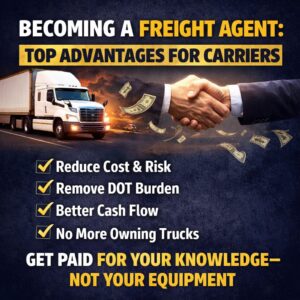
Becoming a freight agent
-
Working under a brokerage
-
Coordinating freight instead of running trucks
This removes major costs like:
-
Insurance
-
Equipment
-
Maintenance
-
Driver management
Instead, you focus on relationships and moving freight.
According to industry trends, many former carriers are transitioning into logistics roles for more stability.
Practical Tip
Ask yourself:
“Do I want to manage trucks—or manage freight?”
>> IS being an Agent a better option for YOU? <<
Cash flow challenges are one of the most common struggles in the trucking industry—and they’re not always a sign that you’re doing something wrong. In fact, many hardworking trucking company owners are doing everything “right”: keeping their trucks moving, finding consistent loads, and putting in long hours to grow their business. Yet despite all that effort, the financial pressure still builds. That’s because, in many cases, the issue isn’t effort—it’s the structure of the business itself.
Trucking is a capital-intensive industry with a unique financial setup. You’re required to spend money upfront—on fuel, insurance, maintenance, and payroll—while often waiting weeks to get paid for completed work. On top of that, external factors like rising insurance premiums, fluctuating fuel costs, and changing freight rates are largely out of your control. Even when revenue is steady, these variables can quietly erode your margins and create ongoing cash flow strain.
From delayed payments and rising insurance costs to unpredictable freight markets and growing overhead, trucking companies operate under constant financial pressure. It’s a balancing act that requires not just hard work, but strategic awareness. Once you understand where the pressure is coming from, you can start making more informed decisions—whether that means tightening your operations, adjusting your pricing strategy, or reevaluating how your business is structured.
The key is realizing that you have options. Some owners choose to streamline their operations—running fewer trucks, cutting unnecessary expenses, and focusing only on the most profitable lanes. Others double down on efficiency by improving relationships with direct shippers or using tools to better manage cash flow. And then there are those who decide to take a different route altogether—shifting into roles within logistics that allow them to stay in the industry without carrying the same level of financial risk.
Because at the end of the day, success in trucking isn’t just about staying busy or keeping your wheels turning—it’s about building a business that actually supports your goals, your time, and your financial stability. A business that gives you control, not constant stress.
And sometimes, the smartest move isn’t pushing harder within the same system—it’s stepping back, reassessing, and choosing a smarter path forward.



Recent Comments